


LEGO® Hill Climb Adventures
4.0373.00 Reviews
App Specs
- Version
- 2.3.1
- Updated On
- License
- Free
- Downloads
- 1,000,000+
- Developer
- Fingersoft
- Categories
- Racing
- Platform
- Android, iOS
Screenshots
 Analysis by AppCompare
When I’m choosing a mobile racer, I first ask whether I want precise competition, relaxed pick-up-and-play sessions, or something playful that rewards tinkering as much as driving. LEGO® Hill Climb Adventures is aimed at that last mix. It’s a free racing game from Fingersoft, and its brick-built presentation gives the familiar challenge of getting over uneven ground a light, toy-box feel. I find it most appealing when I want to make a few attempts, adjust my approach, and enjoy the small victories rather than chase a serious simulation.
That distinction matters. The game’s appeal is not simply that it uses LEGO styling; it is the combination of vehicle handling, terrain, and customization. It can suit a short break, but it also gives players reasons to return and work on a run. If you mainly want realistic motorsport, tightly controlled circuit racing, or a game that is enjoyable without any trial and error, you may be happier elsewhere in the racing genre.
What kind of racing experience to expect
The driving asks for attention to speed and tilt, especially when a slope or jump can upset your vehicle. I like that the basic idea is easy to grasp while still leaving room to improve: going faster is not always the same as making better progress. A careful approach to a rough section can be more useful than charging through it, so each attempt becomes a small lesson in control.
This makes the game a good fit for players who enjoy learning a course by feel. Rather than treating every run as a straightforward sprint, I pay attention to how the vehicle behaves over a rise and try to carry a useful rhythm into the next section. That is a more satisfying loop for me than simply repeating a route at full speed, though it can feel slow if I’m in the mood for immediate, predictable racing.
Why the building angle matters
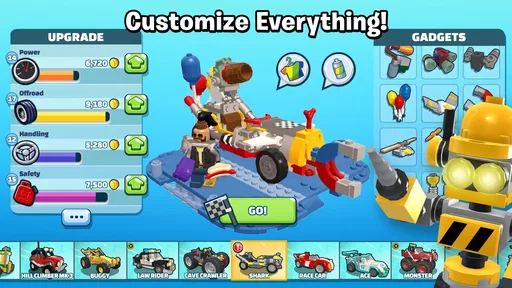
Customization gives the driving a practical reason to experiment. Instead of thinking of a vehicle as fixed, I can treat its build as part of the problem-solving: if a route is giving me trouble, it makes sense to consider whether a different setup might suit it better. That makes the LEGO theme feel connected to play rather than only to appearance.
My advice is to change one thing at a time when testing a build. If I alter several parts together and the next run goes better or worse, it is hard to tell what made the difference. A small, deliberate adjustment gives a clearer answer and helps me understand whether I’m improving the vehicle or simply driving the section differently. The trade-off is that players who prefer a fixed car and a clean racing line may see this tinkering as an extra step rather than a highlight.
A Brick-tastic Journey Begins
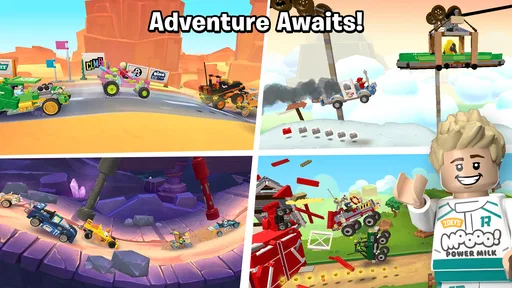
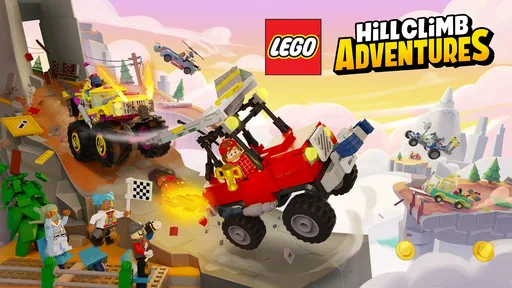
From the moment you launch LEGO® Hill Climb Adventures, you're greeted with vibrant visuals that instantly transport you into a playful universe. The game is designed to captivate both kids and adults, offering a fun, casual experience that's perfect for a quick gaming session or a longer playthrough.
Worth Reading Before You Choose

EA SPORTS FC Mobile 26 Is a Bigger Football Game, but It Takes Time

Flipboard Shows What News Apps Must Do Beyond the Feed

Switching to Android Auto Means Rethinking Your Driving Routine

Google Calendar Makes a Crowded Week Easier to Manage

Ludo King Makes the Most of the Minutes Between Plans

Baby Panda World Brings Quick Play to Modern Phones, but Its Game Library Feels Busy
The premise is simple yet engaging. You take control of a variety of vehicles, each built from LEGO bricks, and race through diverse terrains. Whether you're zooming through bustling city streets or navigating tricky off-road tracks, every course is packed with surprises and obstacles to keep you on your toes.
Gameplay Mechanics and Features
Now, let's talk about the gameplay mechanics. At its core, the game is all about balance and timing. You need to carefully manage your vehicle's speed and tilt to overcome hills, jumps, and other environmental challenges. Trust me, it sounds easier than it is!
One of the coolest features is the customization aspect. You can build and modify your vehicles using a plethora of LEGO pieces. Want to add a rocket booster or swap out your tires for something more rugged? Go for it! This feature adds a creative layer, allowing you to experiment and optimize your rides to suit different tracks.
Challenges and Rewards
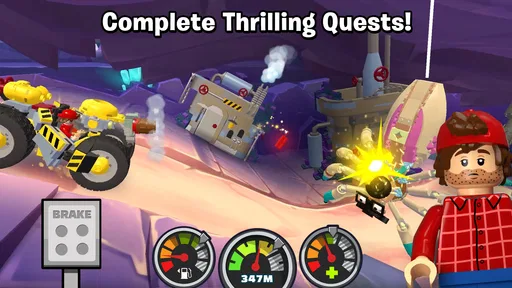
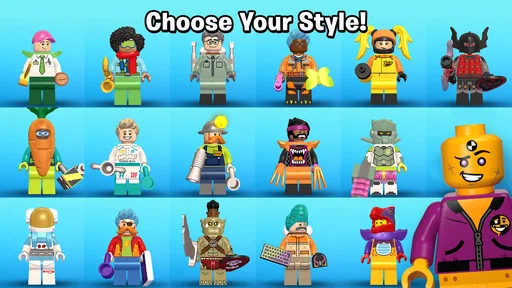
As you progress through the game, you'll encounter various challenges that test your skills. Completing these challenges earns you rewards in the form of new parts, vehicles, and even characters. The progression system is well-paced, ensuring that you always have something to strive for without feeling overwhelmed.
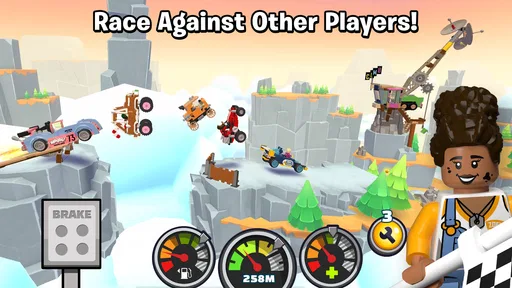
There's also a competitive element with leaderboards, where you can see how your times stack up against other players. It's a nice touch that adds a bit of friendly competition to the mix.
How it fits into everyday play
A realistic way to use this game is to pick it up during a short wait, focus on one troublesome stretch, and stop after a few purposeful attempts. That keeps the hill-climb challenge enjoyable without turning a spare moment into a long grind. If you have more time, you can make a session about comparing vehicle setups and seeing whether a change helps on the terrain you’re tackling.
For younger players or a family sharing a device, the colorful LEGO look and straightforward driving idea are approachable. The Everyone age rating reflects that broad audience, but individual tolerance for repeated attempts still matters: a child who enjoys experimenting may be happy to retry a jump, while someone who expects every run to succeed quickly could become frustrated. I’d treat it as a game to enjoy together and talk through choices, rather than assuming the age rating means every player will like its handling challenges.
Where competing racers may be a better fit
Compared with conventional circuit racers, this is less about finding a perfect racing line around a familiar track and more about managing a vehicle over uneven ground. If your favorite part of racing games is close, clean competition and shaving time through precise cornering, a more traditional racer is likely the better choice. If you want a physics-focused hill-driving game without the LEGO building layer, that narrower style may also suit you better.
On the other hand, many casual racers emphasize quick laps and simple repetition. Here, modifying a brick-built vehicle gives me another way to approach difficulty, which makes it more inviting for players who like creative choices alongside driving. The exchange is that customization can’t replace learning the controls: a different build may help, but the player still has to manage speed and tilt. I wouldn’t choose it as a substitute for a realistic racing simulator; its appeal is deliberately more playful and hands-on.
Small habits that make attempts more useful
When a run goes wrong, I try to identify the exact moment things stopped working instead of changing the whole setup immediately. Was I carrying too much speed into a hill, or did I lose balance after a jump? That quick diagnosis makes each retry informative. If the same problem keeps happening despite a calmer approach, then testing a vehicle adjustment is a more useful next move than making random changes.
I also find it helpful to separate experimenting from chasing a leaderboard result. A run spent trying a new build is useful even if the time is not impressive; a run aimed at a better time is easier to judge when I already know how the vehicle behaves. The leaderboard can add motivation, but it can also shift attention toward comparison. If that makes a casual session feel like homework, I’d ignore the rankings and use the challenges as personal milestones instead.
Progress, expectations, and spending
Challenges provide a sense of direction, with new parts, vehicles, and characters serving as rewards for progress. That structure helps answer the practical question of what to do after learning the basics: take on a challenge, earn something, then see whether the new option changes how you approach a course. I wouldn’t expect every reward to transform the driving, though. The satisfaction comes from the gradual cycle of trying, earning, and experimenting, not from assuming that each unlock will solve every difficult section.
The game is free to download and includes optional in-app purchases, with listed items ranging from under a dollar to around a hundred dollars. I’d start by playing without spending and decide whether the regular progression already feels enjoyable. That is especially sensible for a family device: an Everyone rating does not remove the need for an adult to review purchase settings and discuss spending with a child. If you prefer games with no purchase prompts or paid options at all, that is a fair reason to choose a different racer.
Practical fit and device expectations
The game is currently at version 2.3.1 and requires Android 9 or later. It has been available since May 29, 2024, and has passed one million installs. Its average rating is 4.0 from around 8,500 ratings, with 368 written reviews. Those figures suggest a sizeable audience, but they are not a guarantee that its particular balance-and-tilt driving will suit you; the best guide is whether that style sounds fun.
For a phone you use in brief bursts, the clear goal of improving a run makes it easy to return without needing to plan a long session. If you are choosing a game for someone who wants deep motorsport systems or extended head-to-head competition, I would look elsewhere first. This is strongest when the player enjoys a friendly challenge and sees rebuilding or adjusting a vehicle as part of the entertainment, not as a chore between races.
Visuals and Soundtrack
Visually, the game is a treat. The graphics are crisp and colorful, capturing the essence of LEGO bricks perfectly. Each track is uniquely designed, offering a distinct aesthetic that keeps things fresh and exciting.
The soundtrack is equally charming, with upbeat tunes that complement the playful nature of the game. It's the kind of music that keeps you energized and motivated, even during those tricky sections where you might need a few attempts to nail the perfect run.
Who I’d recommend it to
I’d recommend it to LEGO fans who want their building interest to connect with a game they can actively steer, and to casual racing players who enjoy controlling a vehicle through awkward terrain. It is also a reasonable choice for someone who wants a bright, approachable game with challenges to work through rather than a purely competitive racer. The key question is whether retries and small adjustments sound satisfying to you.
I’d skip it if I wanted realistic vehicle behavior, a straightforward lap-racing format, or a game that never asks me to experiment after a failed attempt. Players who dislike optional purchases may also prefer a title without them, even though the game can be downloaded for free. Being clear about those preferences makes the decision easier than judging it only by its cheerful presentation.
Final Thoughts
So, is LEGO® Hill Climb Adventures worth your time? Absolutely. It's a delightful blend of creativity and racing that offers plenty of entertainment for players of all ages. Whether you're a die-hard LEGO enthusiast or just looking for a fun, casual game to pass the time, this one's definitely worth a download.
With its engaging gameplay, endless customization options, and charming visuals, LEGO® Hill Climb Adventures is a game that truly stands out in the mobile gaming world. So go ahead, give it a spin and embark on your own brick-tastic adventure!
Pros
- Engaging and colorful graphics.
- Simple controls for easy gameplay.
- Variety of vehicles to unlock.
- Frequent updates with new levels.
- Offline mode available.
Cons
- In-app purchases can be pricey.
- Some levels feel repetitive.
- Ads may interrupt gameplay.
- Limited customization options.
- Requires frequent internet connection.
FAQs for LEGO® Hill Climb Adventures
What is LEGO® Hill Climb Adventures?
LEGO® Hill Climb Adventures is an exciting driving game where players navigate through a variety of terrains using customizable LEGO vehicles. The game combines classic LEGO building elements with challenging hill climbing mechanics, offering a unique experience that is both creative and thrilling. Players can collect coins, unlock new vehicles, and explore different worlds.
Is LEGO® Hill Climb Adventures suitable for all ages?
Yes, LEGO® Hill Climb Adventures is designed for players of all ages. Its simple controls and engaging gameplay make it accessible for younger players, while the strategic elements and vehicle customization options provide depth for older gamers. The game is family-friendly, with no inappropriate content, making it a safe choice for kids.
Can I play LEGO® Hill Climb Adventures offline?
LEGO® Hill Climb Adventures offers offline gameplay, allowing you to enjoy the game without an internet connection. This feature is perfect for playing on the go, during travel, or in areas with limited connectivity. However, some features, such as in-app purchases or updates, may require an internet connection.
Are there in-app purchases in LEGO® Hill Climb Adventures?
Yes, LEGO® Hill Climb Adventures includes in-app purchases. Players have the option to buy coins and special items to enhance their gaming experience. While the game is free to download and play, these purchases can help unlock additional content or speed up progress. Purchases are entirely optional and not necessary to enjoy the game.
What devices are compatible with LEGO® Hill Climb Adventures?
LEGO® Hill Climb Adventures is available on both Android and iOS platforms. It requires a device with a compatible operating system and sufficient storage space. To ensure the best performance, check the app's requirements on the Google Play Store or Apple App Store before downloading. Regular updates may also optimize compatibility with newer devices.


